Structural Drying & Dehumidification in El Mirage
A dry-looking floor can hide damp materials. The drying stage addresses moisture that extraction alone cannot remove.
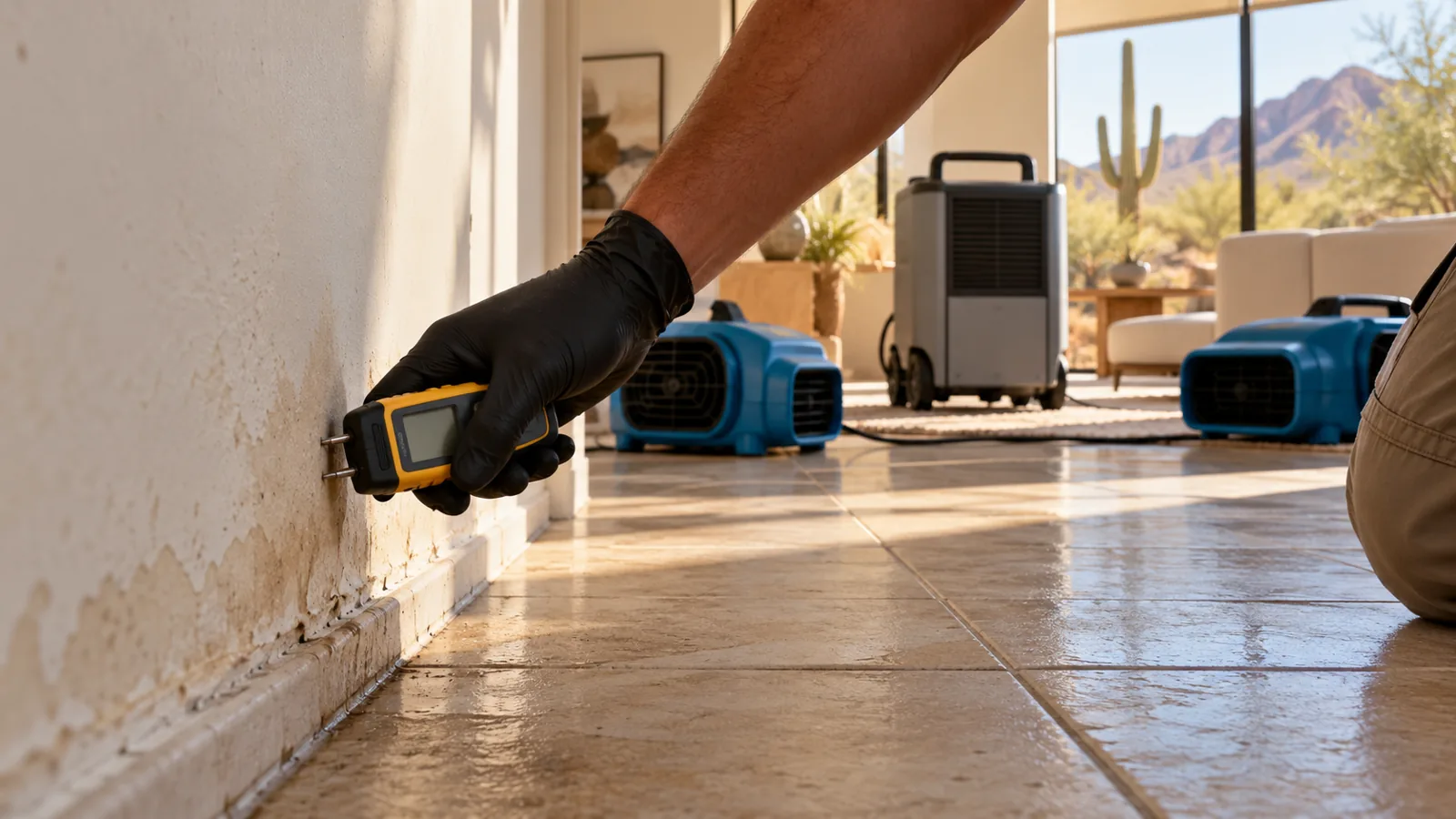
What this situation requires
Drying decisions should follow the water source, material type, how far moisture spread, and repeated measurements—not a fixed number of days.
Describe what happened, whether the source has stopped, and which rooms or materials are wet. A responding provider should assess the actual conditions before recommending a scope.
From first call to a clear plan
Map affected materials
Check the floor, wall edges, cabinets and nearby rooms to define a drying area.
Set a drying plan
Air movement and dehumidification may be used where appropriate; contaminated materials need a different handling decision.
Monitor progress
Recorded moisture readings show whether materials are approaching a suitable dry condition or need another approach.
When this service may fit
- Wet drywall or baseboards
- Damp cabinet toe kicks and vanities
- Carpet and pad after extraction
- Moisture beneath flooring
Source repair, cleanup and reconstruction may be separate work. Ask exactly what the servicing company includes.
What to discuss before the scope is set
A dry surface is not a dry assembly
Cabinet toe kicks, drywall bases, carpet padding and layers under flooring may hold water after the surface is wiped. The provider should describe which materials were checked and how it will monitor them.
Drying is a measured process
Air movement and dehumidification are selected for the conditions, then adjusted from moisture readings. Material removal may be necessary when contamination, damage or inaccessible moisture prevents appropriate drying.
For an address in 85335, describe the source and the actual affected surfaces rather than assuming every wet room needs the same treatment.
Know before booking
How long does structural drying take?
The time varies with the materials, water source, temperature, humidity and extent of saturation. A provider should explain the plan and monitor results.
Can I just use household fans?
Fans may help surface evaporation, but they cannot establish that concealed materials are dry. Consider professional assessment if water entered walls, flooring or cabinetry.